
Failing Fence Replaced With Cedar in Eugene, Oregon
A fence leaning in three places, pulled out and rebuilt in cedar with posts set deep in concrete and plumbed one at a time.

Anyone can build a straight fence. The gates are where you find out whether it was built properly.
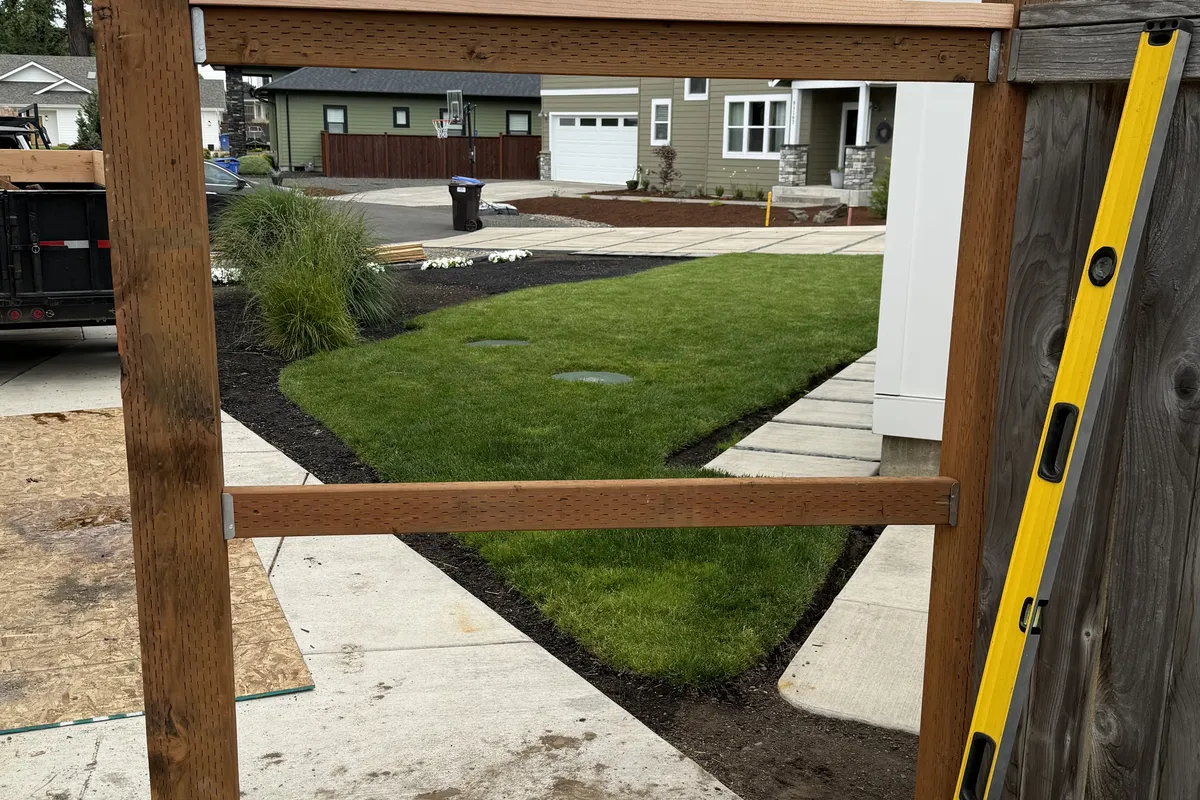
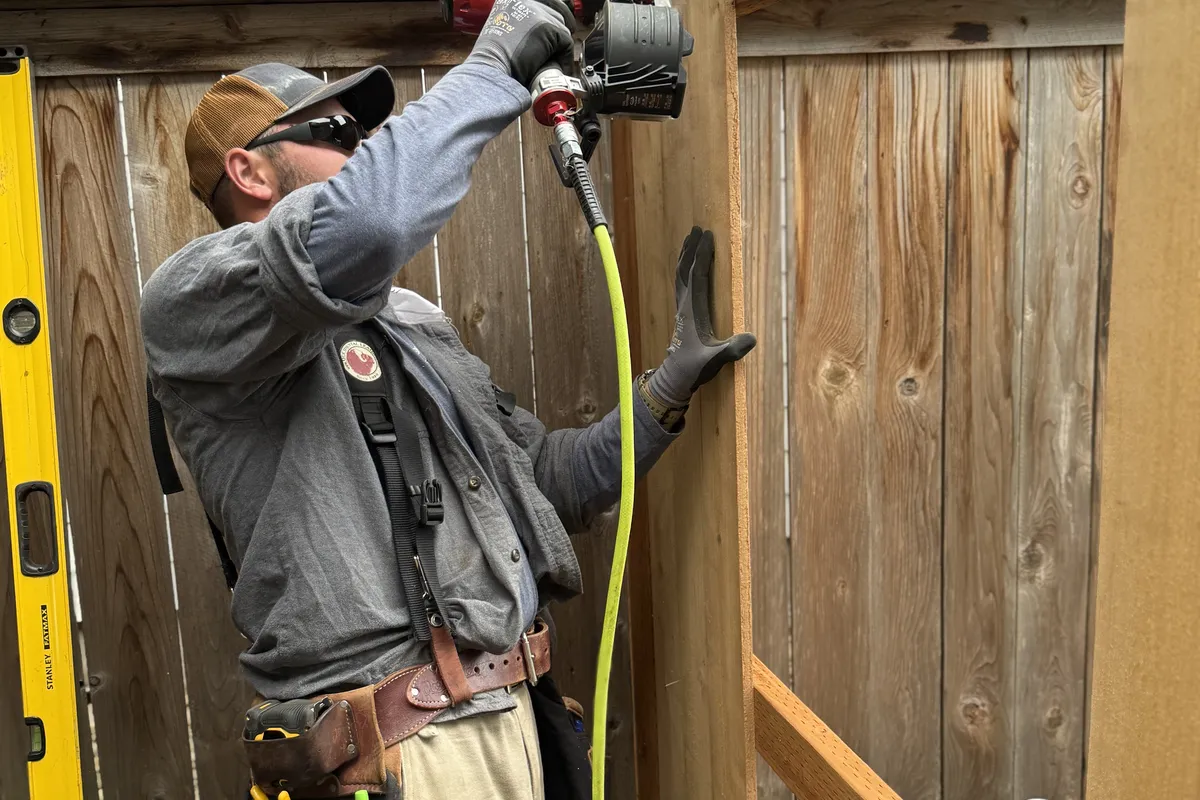
A gate is the only part of a fence that moves, so it is the only part that can go wrong on its own. It carries its whole weight on two or three hinges, it gets pushed and pulled every day, and it has to keep swinging clear through a wet winter and a dry summer while the ground underneath it shifts. Hang one carelessly and inside a year it drags, or the latch stops lining up and someone starts lifting it to shut it.
This property needed two — a walk gate off the path and a double drive gate wide enough to get a trailer through. The double is the harder of the two: two leaves have to meet in the middle, stay level with each other and stay level with the fence on both sides. That only happens if the posts either side are set deeper and heavier than the ones carrying the fence, because they are carrying a load that swings.

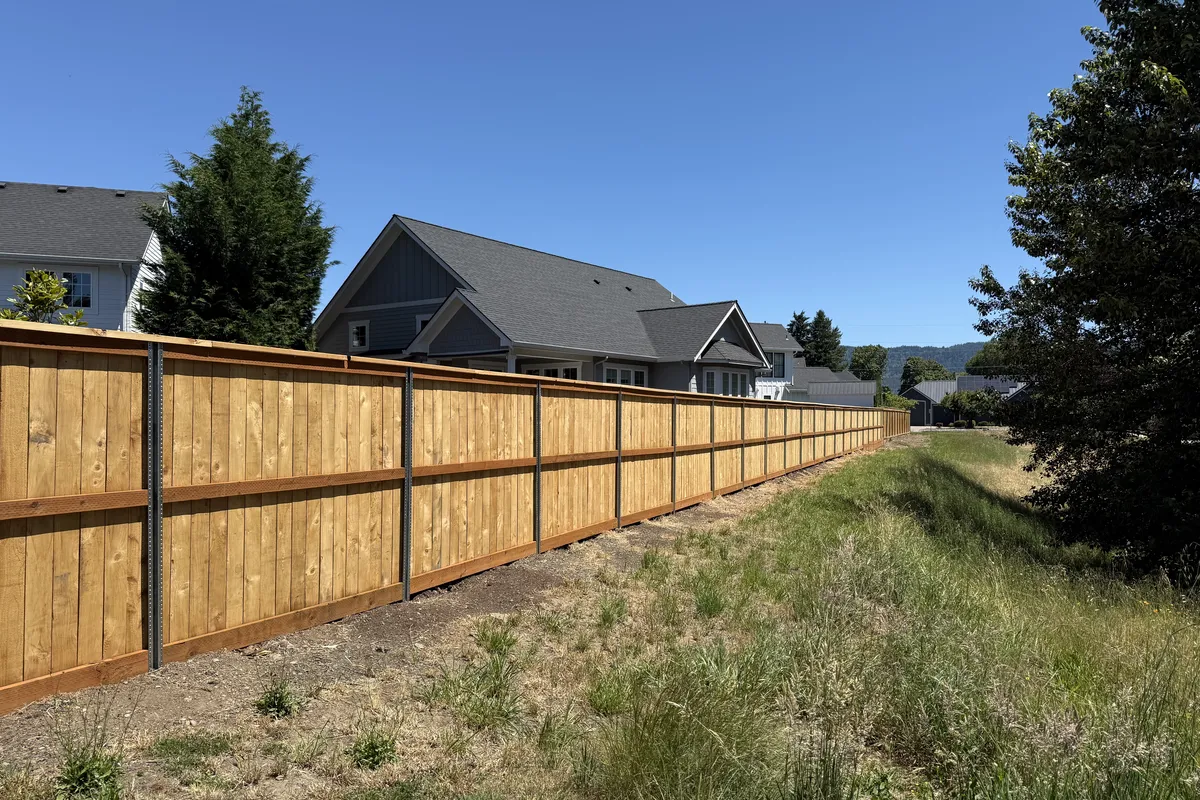
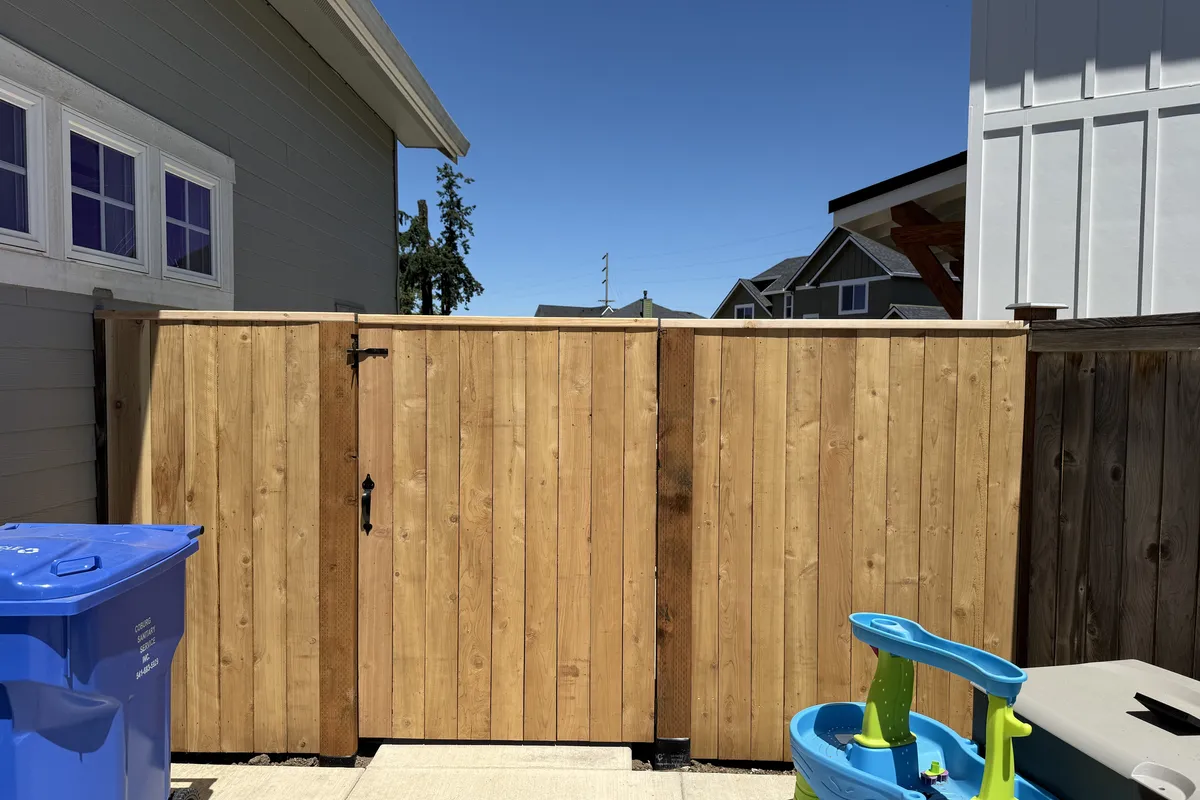
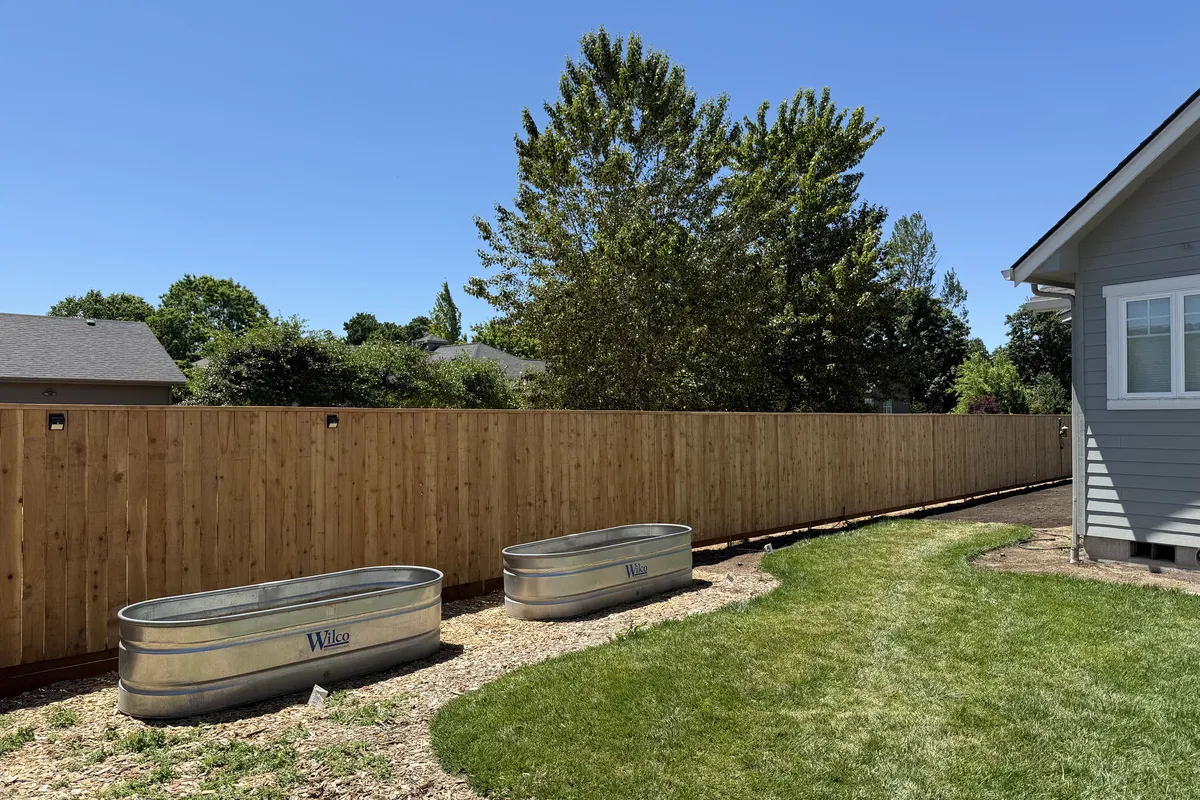
The fence itself is cedar with a capped top rail. The cap is a small detail that does two useful things: it sheds water off the end grain of every picket, and it gives the top line something deliberate to follow.
Because a gate hangs off its post instead of sitting between two of them. All the leverage lands on the hinge post, and if that post is the same size and depth as the rest, it slowly tips. Gate posts should be bigger, deeper, and set in more concrete than the fence line needs.
A fence leaning in three places, pulled out and rebuilt in cedar with posts set deep in concrete and plumbed one at a time.

A full backyard perimeter in cedar, built on steel posts and stepped down the grade so the top line stays deliberate.

Welded wire panels in a wood frame — a real boundary on a wooded lot that leaves every sight line through the trees open.